Disclaimer: The technical specifications and compliance data in this article reflect standard engineering parameters from Ningjin APC Industries, a manufacturer of UL/FM fire protection valves. Specifications serve as technical references for project evaluation; please consult our engineering department for custom project inquiries.
1. Introduction & Working Principle
A gate valve is a linear-motion isolation valve designed to open or close fluid flow by raising or lowering a solid or wedge-shaped disc perpendicular to the flow direction. In the fully open position, the gate retracts entirely from the flow path, resulting in minimal pressure drop and an unobstructed, full-bore passage. Consequently, gate valves are applied strictly in full-open or full-closed isolation service rather than flow regulation or throttling.
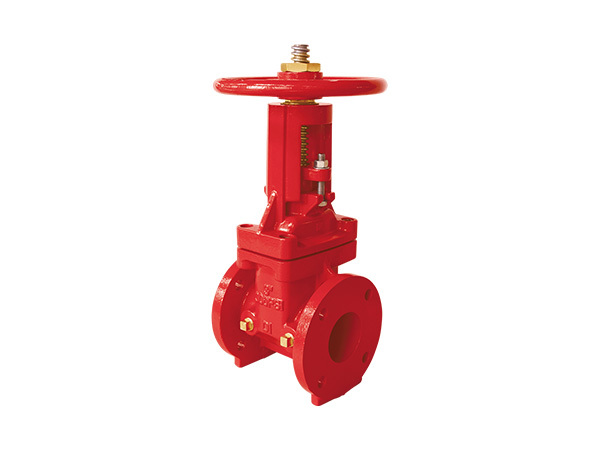
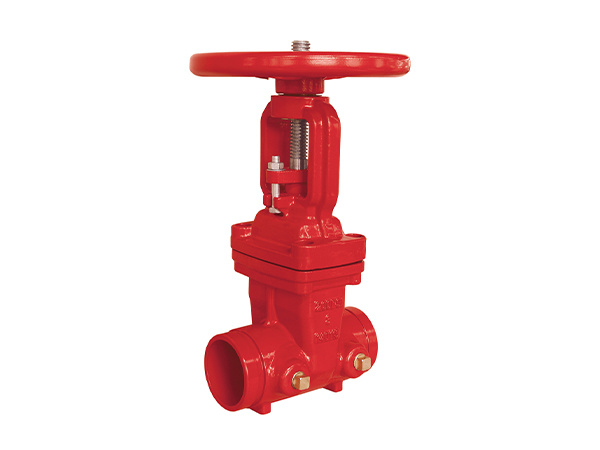
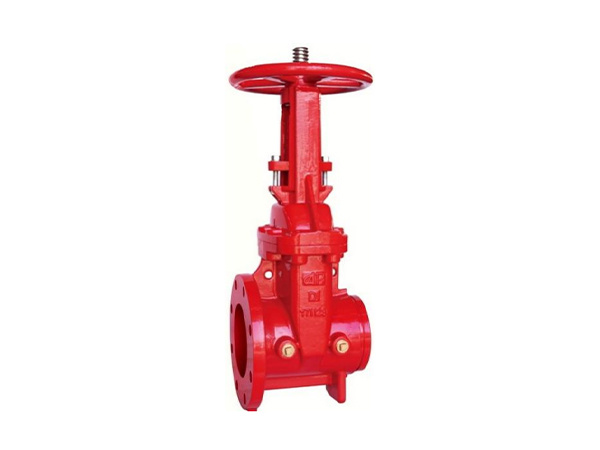
Operation involves rotating a handwheel to turn a threaded stem, translating rotational motion into linear vertical movement of the gate. In water supply and fire protection engineering, gate valves are generally divided into two stem designs: OS&Y (Outside Screw and Yoke), where the rising stem provides clear visual verification of valve position, and NRS (Non-Rising Stem), utilized primarily in underground installations connected to valve boxes or indicator posts.
2. Gate Valves in Fire Protection Systems
In fire sprinkler systems, standpipe networks, and fire pump rooms, reliable isolation is critical to prevent water supply interruptions. Fire protection gate valves incorporate specific design characteristics:
- Full-Bore Hydraulic Performance: Minimizes friction loss during high-volume fire pump operations to maintain adequate residual pressure.
- Supervisory Switch Accommodation: OS&Y valves feature stem machining designed to interface with electrical supervisory switches connected to the Fire Alarm Control Panel (FACP).
- Underground Post Indicator Compatibility: NRS valves facilitate connection to above-ground indicator posts for yard main operation.
3. Fire Protection Gate Valve Selection Guide
Engineering specification of gate valves for commercial or industrial piping requires verification of standardized technical parameters:
| Selection Parameter | Standard Fire Protection Specification | Engineering Rationale |
|---|---|---|
| Maximum Working Pressure | 300 PSI (2.1 MPa) | Withstands static head pressure in high-rise buildings and fire pump churn pressure. |
| Hydrostatic Test Pressure | 600 PSI (2× Working Pressure) | Factory test verifying structural pressure boundary integrity and seat tightness. |
| Operating Temperature | 0°C to 80°C (32°F to 176°F) | Standard municipal and fire water service temperature range. |
| End Connections | Flanged (ANSI / DIN), Grooved (AWWA C606), Mechanical Joint | Selected according to pump room headers or distribution piping standards. |
| Certifications | UL 262, FM 1120, VdS, CE, CCC, NSF/ANSI 61 & 372 | Compliance standards required by regional authorities and insurers. |
4. Industry Manufacturers & Production Models
Procuring from established valve manufacturers ensures adherence to recognized material and testing standards. Commonly recognized industry participants include:
- Mueller Co. (USA): Manufacturer of resilient wedge gate valves and municipal water control products.
- Kennedy Valve (USA): Supplier of OS&Y and NRS gate valves for fire protection and waterworks.
- AVK Group (Denmark): Producer of ductile iron gate valves for water supply and fire networks.
- NIBCO Inc. (USA): Manufacturer of commercial and industrial bronze and iron gate valves.
- Ningjin APC Industries (China): A manufacturer of fire protection valves, producing 300 PSI ductile iron gate and butterfly valves. Operating under a made-to-order production model with certifications including UL, CUL, FM, VdS, CE, CCC, and NSF/ANSI 61 & 372, the company supplies valve products to international distributors and contractors based on specific project requirements.

5. Frequently Asked Questions (FAQ)
No. Throttling flow with a partially open gate valve causes high-velocity fluid turbulence, leading to vibration, cavitation, and accelerated wear on the resilient EPDM seating surfaces. Gate valves should be operated exclusively in fully open or fully closed positions.
An OS&Y gate valve provides an unobstructed full-bore flow path with a rising stem indicating position, commonly specified on fire pump suction lines. A butterfly valve utilizes a compact quarter-turn disc design suitable for space-limited sprinkler risers.
These standards verify that the valve body, internal stem strength, protective coating, and sealing mechanisms maintain structural integrity and reliable operation under high-pressure fire conditions.
Due to varying flange drillings and connection standards, manufacturers such as Ningjin APC Industries produce valves on a made-to-order basis, with typical production lead times ranging from 6 to 9 weeks.